Why this chapter exists
Good cable management shortens moves and fault finding while protecting ports and airflow.
See the physical work before reading the details
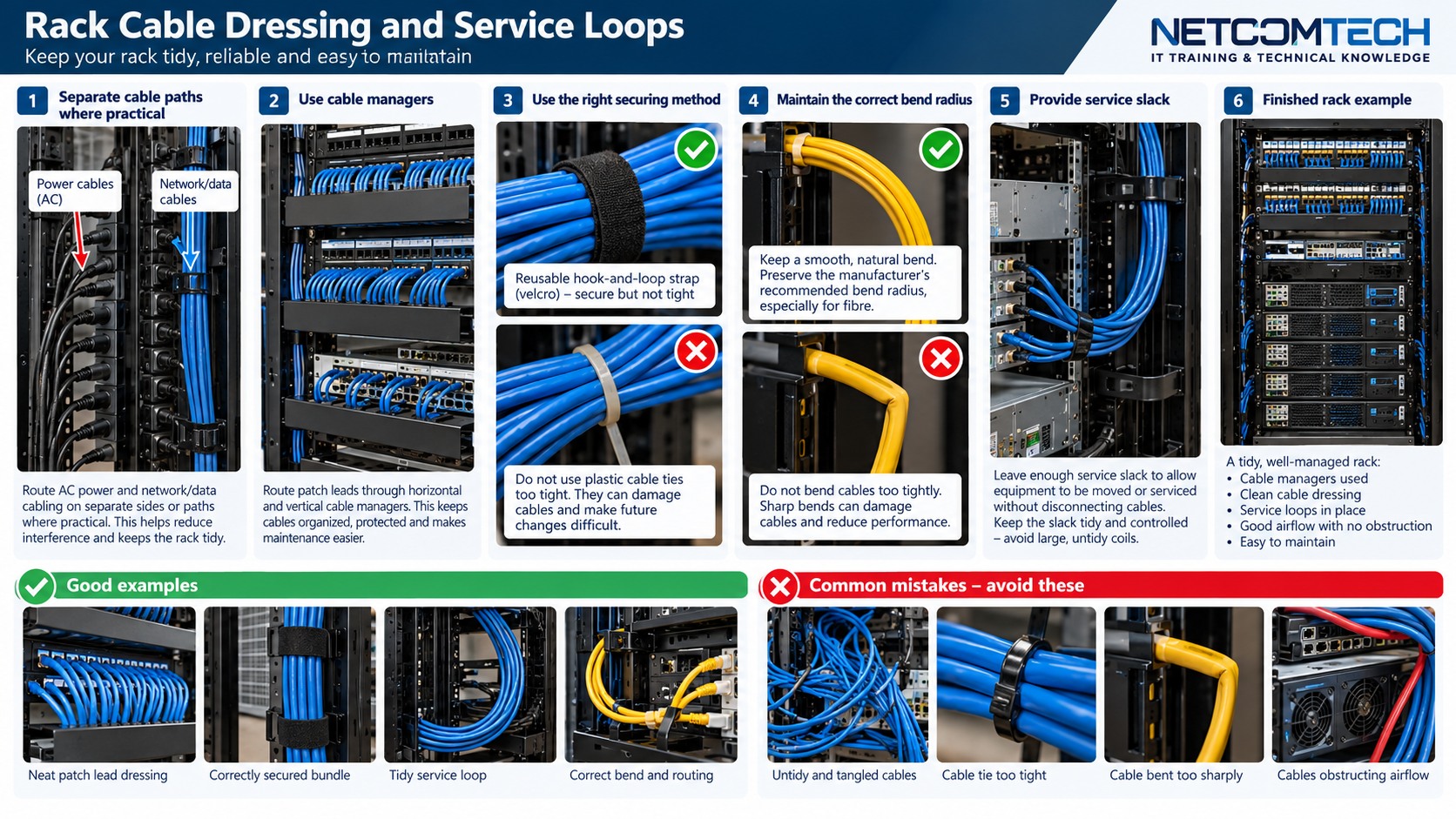
Original Netcomtech training illustration. Product-specific termination geometry varies, so use the component manufacturer's instruction sheet on site.
10.1 Separate permanent cable from patching
Horizontal cable arrives at the rear termination field. Patch cords live at the front. Keep their management jobs separate so front changes do not disturb fixed terminations.
10.2 Slack must be controlled
Leave enough service length for maintenance and retermination, but store it in an intentional location. Large coils behind equipment obstruct airflow and become snag points.
Follow manufacturer bend radius for copper and fibre slack loops.
10.3 Use the right manager density
High-density 48-port panels and many short patch leads need enough vertical/horizontal capacity. Overfilled fingers and managers force tight bends and make labeling unreadable.
10.4 Patch cords should be replaceable
Patch cords are consumable flexible components. Do not cable-tie them permanently into a structure that requires cutting half the rack apart to replace one lead.
10.5 Document normal appearance
Take final front and rear cabinet photographs. Future work can compare against a known commissioned state.
Workshop exercise
Build a sample of this installation method on a training bench. Photograph the preparation before termination, the finished termination and the test result. Explain what would cause you to reject your own work.
Acceptance checklist
- The component matches the cable construction and category.
- The manufacturer's installation method was followed.
- No conductor, jacket, screen or fibre damage is visible.
- Pair twist, bend radius and strain relief are preserved.
- The correct test model and limit were used.
- The cable ID matches the drawing and test report.
Technical references
Manufacturer instructions and the project standard always override generic training examples.